
A print-on-demand side hustle is a way to sell custom products online without buying stock or producing and shipping each order yourself.
You create a design, add it to a product and list it through an ecommerce store or online marketplace. When a customer places an order, a print-on-demand partner produces the item and ships it directly to them.
Because products are only made after they sell, you do not need to fill your home with inventory or invest in specialist printing equipment.
This makes print on demand a practical option for beginners who want to make extra money alongside a job, university or other commitments.
It is not instant passive income. You still need to create products, manage your store and attract customers. However, it removes many of the costs and operational tasks involved in starting a traditional product business.
How Does Print on Demand Work?
Print on demand is an ecommerce fulfillment model where products are created after an order is placed.
The process usually works like this:
- You create or upload a design.
- You add it to a product.
- You publish the product in your online store.
- A customer places an order.
- Your print partner produces and ships the item.
You are responsible for deciding what to sell, building your listings and marketing your store. Your fulfillment partner handles production and delivery.
This allows you to test product ideas without purchasing large quantities of stock in advance.
Why Is Print on Demand a Good Side Hustle?
Many side hustles require specialist skills, expensive equipment or fixed working hours. Print on demand offers a more flexible way to explore ecommerce.
Lower Upfront Risk
A traditional product business normally requires you to buy inventory before you know whether customers want it.
If a design does not sell, you may be left with stock that still needs to be stored or discounted.
With print on demand, the product is created after the customer buys it. You can try different designs without committing to a large order.
There may still be some costs, such as product samples, marketplace fees, ecommerce subscriptions or design tools. However, you do not need to begin by purchasing hundreds of products.
Flexible Around Your Schedule
A print-on-demand side hustle can be managed around your existing responsibilities.
You might research ideas in the evening, create products at the weekend and update your store when you have time.
You will still need to respond to customers and keep your listings accurate, but you are not tied to appointments, shifts or a daily shipping routine.
Easy to Start Small
You do not need a large catalog to launch.
A focused beginner store could include one audience, one main product and a small collection of related designs.
Keeping things simple makes the business easier to manage and helps you see which ideas attract the most interest.
Is Print on Demand Passive Income?
Print on demand is often described as passive income, but that can be misleading.
Your fulfillment partner handles production and shipping. It does not run the rest of the business for you.
You will still need to:
- Research products and audiences
- Create or source original designs
- Write product listings
- Answer customer questions
- Promote your store
- Review and improve your products
Some of these tasks may become quicker as you gain experience. However, it is more realistic to think of print on demand as a flexible online business rather than a completely passive source of income.
Can a Print-on-Demand Side Hustle Make Money?
rint on demand can generate additional income, but sales are not guaranteed.
Your results will depend on choosing a clear audience, creating products people want and making it easy for customers to find and understand those products.
The benefit of the model is that you can test ideas without purchasing large amounts of inventory. You can learn from customer interest and adjust your products without being left with boxes of unsold stock.
For a closer look at product selection, pricing, margins and sales strategies, read our guide on how to make money with print on demand.
Who Is Print on Demand Suitable For?
Print on demand may suit you if you:
- Want to explore ecommerce
- Do not want to hold inventory
- Need something that fits around your schedule
- Have ideas for products or designs
- Understand a particular hobby or community
- Are willing to test ideas and learn over time
You do not need to be an experienced business owner or professional designer.
Understanding a specific audience can be more valuable than having advanced artistic skills. A simple idea that feels relevant to the right group of customers can be more effective than a complicated design created for everyone.
What Can You Sell With Print on Demand?
Print on demand is not limited to T-shirts.
Depending on your fulfillment partner, you may be able to sell:
- Clothing
- Mugs and drinkware
- Wall art
- Bags and accessories
- Personalized gifts
- Home décor
- Metal signs
- Sports products
- Products for hobbies and special interests
The best product is not always the one that appears most popular online. It is the one that makes sense for your target audience.
For example, “funny T-shirt” is a broad idea.
“A funny T-shirt for first-time marathon runners” gives you a clearer customer, design direction and reason to buy.


How to Start a Print-on-Demand Side Hustle
You do not need to plan every part of the business before creating your first product. A focused approach can make the process easier to understand.
1. Choose an Audience
Start with the people you want to sell to.
Think about hobbies, professions and communities you already understand. This could include gaming, fitness, fishing, cars, sports, pets or a particular trade.
Consider what that audience cares about, what products they buy and what jokes, phrases or occasions are relevant to them.
It is usually easier to create genuine products for people you understand than to chase a random trend.
2. Choose One Main Product
Browsing a large product catalog can make it tempting to create everything at once.
Instead, choose one product that suits your audience.
This gives you time to understand the product, improve your designs and create more consistent listings.
You can expand your range later when you have a clearer idea of what customers want.
3. Create a Small Collection
Rather than relying on one design, create a small group of connected options.
You could use different phrases, colours, customer types or personalization choices while keeping the overall theme consistent.
A focused collection gives customers more choice without making your store feel confusing.
Only use artwork, fonts, images and phrases that you own or have permission to use. Avoid protected brands, characters, celebrity images and team logos unless you have the relevant rights.
4. Choose a Fulfillment Partner
Your print-on-demand partner will produce and ship your orders, so it is important to compare more than price.
Look at:
- Product quality
- Product range
- Production costs
- Shipping costs
- Delivery estimates
- Store integrations
- Creation tools
- Customer support
A platform such as teelaunch can simplify the process by giving you one place to create products, connect a supported store and manage fulfillment.
The right partner should make the operational side of your business easier, leaving you free to focus on what you sell and who you sell it to.
5. Choose Where to Sell
You will need an online store or marketplace where customers can purchase your products.
An established marketplace can provide access to existing shoppers, but it also means competing with other sellers and following the platform’s fees and rules.
Your own ecommerce store gives you more control over your branding and customer experience, but you will need to bring in your own traffic.
You do not need to sell everywhere. Start with one platform and learn how it works before expanding.
6. Create and Sample Your Product
Once you have chosen your design and product, use your fulfillment partner’s creation tools to prepare the listing.
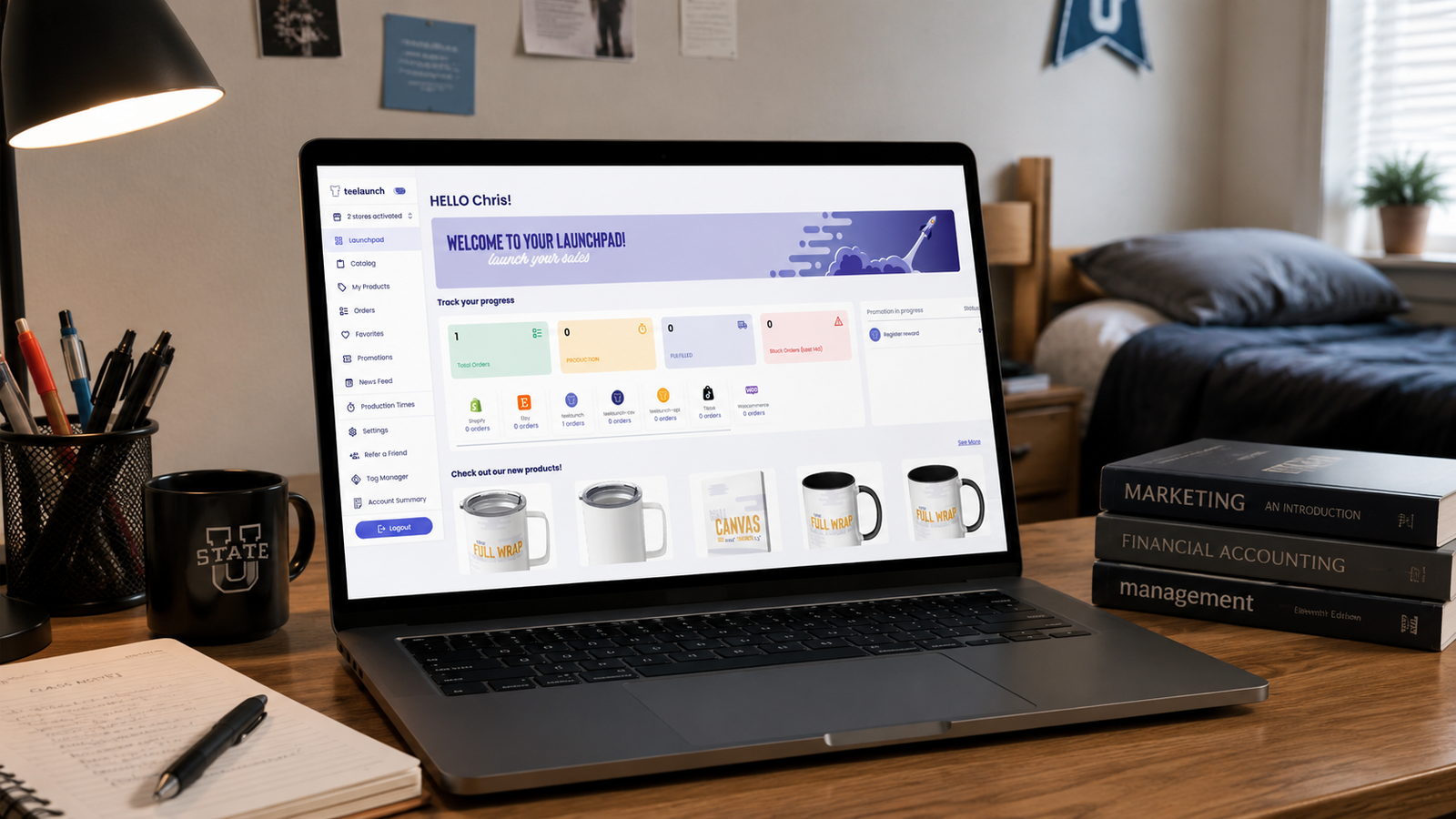
For example, teelaunch sellers can use Launchpad to select products, upload artwork and connect finished items to a supported store.
Before launching, consider ordering a sample. This allows you to check the product quality, print placement, colours, packaging and delivery experience.
It also gives you a physical product to photograph or film for your listing and social content.
7. Build a Clear Listing
Your product page should tell customers exactly what they are buying and who the product is for.
Include clear images and useful details about:
- Materials
- Sizes
- Product options
- Personalization
- Care instructions
- Production and delivery
Use a specific title that reflects the way your audience might search.
“Personalized gym shirt for powerlifters” is more useful than “cool custom shirt.”
8. Publish and Learn
Your first product does not need to be perfect.
Publish it, monitor customer interest and use what you learn to improve the next version.
You may need to update the images, clarify the description or create another design based on what customers respond to.
The process becomes easier as you gain experience. Straightforward tools and accessible support can also help you move forward when you are still learning.
Common Beginner Mistakes
Trying to Sell to Everyone
Products usually perform better when they are created for a specific audience.
A clear customer gives you a clearer product, message and marketing direction.
Launching Too Many Products
A large catalog can become difficult to manage and may make your store feel unfocused.
Start with a small collection and expand when you have a reason to.
Skipping Samples
Mockups are useful, but they cannot fully show the quality or feel of the finished product.
Ordering a sample helps you understand what your customer will receive.
Expecting Immediate Results
It may take time to find the right combination of audience, product and design.
Treat early results as information. Use them to improve rather than expecting your first listing to be an instant success.
Is a Print-on-Demand Side Hustle Worth Starting?
A print-on-demand side hustle is worth considering if you want a flexible way to explore ecommerce without buying bulk stock.
You do not need a warehouse, specialist printing equipment or a daily shipping routine.
What you do need is a focused idea and a willingness to learn.
Start with one audience. Choose one product. Create a small collection and see how customers respond.
Your first product does not need to replace your full-time income. It simply needs to help you take the first step and learn enough to make the next one better.
Start Your Print-on-Demand Side Hustle
teelaunch gives you a straightforward way to create products, connect your store and manage fulfillment without holding inventory or producing each item yourself.
Explore the product catalog, build your first collection through Launchpad and access support as you get started.