

If you run a Print on Demand store in 2026, or plan to start one, print on demand is a practical way to launch fast. You can sell products without buying inventory upfront.
In 2026, POD isn’t just “a side hustle model.” It’s now a serious ecommerce engine. It is driven by personalization and faster delivery expectations, Think TikTok. Creators are also building direct-to-fan brands.
In this guide, we’ll cover:
- What is print on demand (simple explanation)
- The POD market growth story in 2026 (with key stats)
- The biggest opportunities for small businesses
- Common mistakes to avoid
What is print on demand?
It’s a fulfillment model where a company prints products only after a customer places an order.
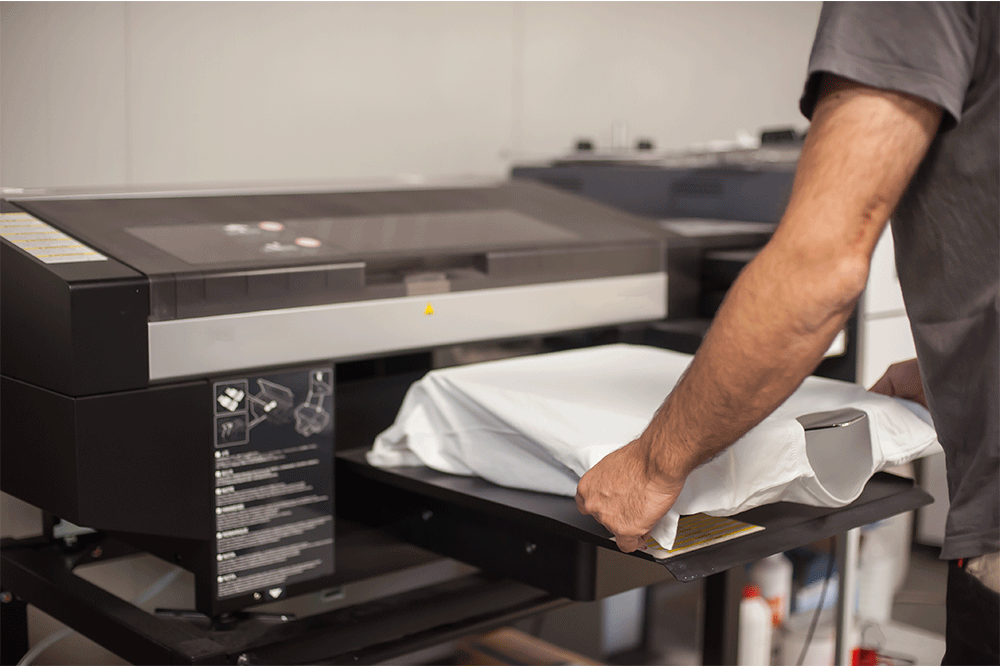
Instead of buying 200 t-shirts and hoping they sell, you:
- Create a design
- List it on your store (Shopify, Etsy, TikTok shop, etc.)
- When someone orders, your print partner produces and ships it
That means no warehousing, no unsold stock, and much lower upfront risk. That is why print on demand keeps attracting new store owners in 2026.
POD in 2026: what’s changed (and why it matters)
Print on demand still follows the same idea: sell first, print second.
But in 2026, your advantage comes from how well you execute.
1.) Customers expect “personalized by default”
Names, initials, dates, locations, and inside jokes are not “premium add-ons” anymore. They are often why someone chooses your product over a generic option.
2.) Multichannel is the new normal
Most winning POD brands aren’t relying on one platform. They’re stacking channels: your own site + marketplaces + social commerce. TikTok Shop, in particular, has continued pushing POD via app integrations for sellers who want to test products quickly.
3.) The end of the infinite product catalogs
You don’t need 300 SKUs. You need the right hero products with reliable production, clear shipping expectations, and a brand that looks legitimate.
POD Market Growth in 2026: key stats (and what they mean for you)
Market forecasts vary, but they all point in the same direction: print on demand is growing fast.

Here are the most useful numbers for store owners:
- Global print on demand market: estimated $10.78B in 2025, projected to reach $57.49B by 2033 (CAGR 23.6% from 2026–2033).
- The report estimates the 2026 market size at $13.06B. It also notes North America has about a 36% share. Apparel is the top product category.
- Another global forecast projects POD growing from $11.0B (2025) to $89.4B (2035) at 23.3% CAGR.
- IMARC estimates $11.4B (2025) to $61.8B (2034) at ~20.06% CAGR.
And zooming in on a core POD category:
- Custom t-shirt printing: $5.16B in 2024 projected to $9.82B by 2030 (CAGR 11.5%).
Why this matters for small businesses:
- Growth brings competition—but also more consumer demand, better tools, and more channels to reach buyers.
- The winners won’t be “who has the most designs.” It’ll be who builds a clear niche + strong brand + smooth customer experience.
The biggest opportunities for small businesses (store owners) in 2026
1.) Micro-niches that feel personal
The internet is full of generic “funny shirt” stores. What still works is identity-based and community-based niches like:
- Local pride (cities, neighborhoods, inside references)
- Profession-specific (nursing, trades, teachers, creators)
- Lifestyle tribes (running clubs, climbing, gaming communities)
- Pet people (by breed, type, rescue stories)
Your advantage as a small brand: you can speak like an insider and launch fast.
2.) Personalized gifting (year-round, not just Q4)
Demand for personalized gifts has stayed strong on major marketplaces—Etsy, for example, pointed to steady demand for personalized gifts as a driver in performance reporting.
POD-friendly gifting products include:
- Stickers (great as add-ons)
3.) “Hero products” with upsells
A simple store structure wins:
- 1–3 hero products (the main thing you sell)
- A few add-ons (stickers, mugs, totes)
- A premium upgrade (embroidered hat, heavyweight hoodie, framed print)
Even mainstream ecommerce coverage highlights those categories as consistent converters in print on demand.
Common Print on Demand mistakes to avoid in 2026
These mistakes quietly ruin most print-on-demand stores. The ideas are not bad. But poor execution leads to low sales, refunds, or launches where nothing happens.

1.) Trying to sell to everyone (no niche = no traction)
When your store is “for everyone,” your messaging becomes generic. Generic stores struggle to:
- rank on Search (no clear keyword focus)
- convert visitors (no clear “this is for me” feeling)
- build repeat customers (no community identity)
Fix: pick one clear audience and build around them.
Examples:
- “Minimalist gym merch for women”
- “Funny merch for cat moms”
- “Streetwear-inspired tees for gamers”
Then align everything—design style, product selection, product descriptions, and social content—to that audience.
2.) Uploading random designs instead of building a collection
A store with 50 unrelated designs feels like a marketplace stall. A store with a collection feels like a brand.
Random design uploads lead to:
- inconsistent look and feel (reduces trust)
- scattered marketing (hard to build a content plan)
- higher ad costs (no clear target buyer)
Fix: build mini-collections.
Start with 10–20 designs that belong together:
- same typography style
- consistent color palette
- similar humor tone or aesthetic
- a “hero design” plus supporting variations
3.) Weak product pages (great design, poor conversion)
In 2026, customers are cautious. They want clarity. Stores lose sales when pages lack:
- sizing guidance
- fabric details and fit notes
- good product images/mockups
- delivery expectations
- clear returns policy
Fix: treat every product page like a sales page:
- add a sizing chart + “fit” note (true to size, oversized, etc.)
- write benefit-driven descriptions (not just “high quality”)
- use lifestyle mockups that match your niche
- include shipping timelines clearly
4.) Skipping samples (quality surprises become expensive fast)
New store owners often launch without ordering samples. The risk:
- print looks different than expected
- colors appear dull or too bright
- sizing or fit feels off
- packaging disappoints customers
- longer shipping than you assumed
Fix: order samples of your top products and check:
- print alignment, vibrancy, durability
- garment feel, stitching, fit
- packaging + insert options
- real delivery time to your main customer region
One sample order can prevent weeks of refunds and bad reviews.
5.) Pricing like a hobby, not a business
A lot of POD sellers price too low trying to compete. But with print on demand, your costs are higher than bulk manufacturing—so low pricing often means no profit.
Common pricing errors:
- forgetting platform fees / payment processing
- not budgeting for promotions and discounts
- leaving no room for returns/replacements
- ignoring shipping psychology (customers hate surprise shipping fees)
Fix: price with margin + marketing in mind:
- Know your true cost per sale (base + shipping + fees)
- Set a margin that can survive discounts (10–20%)
- Consider bundles or free shipping thresholds
6.) Competing only on price (race to the bottom)
If your main pitch is “cheaper,” a bigger seller can always undercut you.
Fix: compete on:
- niche relevance (designs that feel personal)
- brand identity (aesthetic + voice)
- personalization (names, dates, custom text)
- social proof (reviews, UGC, lifestyle photos)
When the product feels made for the buyer, the buyer cares less about price.
7.) Depending on one traffic source
Many stores rely on just one channel (like ads or Etsy). If that channel dips, sales vanish.
Fix: build a simple traffic stack:
- short-form video (TikTok / Reels)
- email list (even small lists convert well)
- retargeting ads once you have data
The goal is stability, not viral luck.
8.) No differentiation (same trends as everyone else)
Trendy designs can work—but if you’re late, you’re competing with thousands of copies.
Fix: differentiate with:
- a specific niche angle (“for nurses in pediatrics,” not just “nurse life”)
- better design systems (consistent, professional look)
- personalization options
- unique product types (premium tees, embroidered hats, oversized fits, etc.)
9.) Ignoring fulfillment expectations (and getting refund requests)
A huge POD killer is mismatched expectations. Customers get frustrated when:
- delivery timelines aren’t clear
- tracking is slow to update
- “production time” isn’t explained
- return policies feel vague
Fix: set expectations everywhere:
- product page: production + shipping estimate
- checkout: remind about timelines
- post-purchase email: “Here’s what happens next”
- FAQ: shipping, returns, exchanges, damaged items
Clear expectations reduce support tickets and chargebacks.
10.) Not using data to iterate (launch once, then guess)
Most POD wins come from iteration: improving what already has signals.
Common “no data” behavior:
- changing everything at once
- killing designs too early
- running ads without a clear conversion goal
- not tracking best sellers by niche, color, or placement
Fix: run small tests and improve:
- start with 5–10 designs
- track views → add to cart → purchases
- double down on what gets saves/comments on social
- create variations of winners (different text, colorways, product types)
Quick checklist: POD store health in 2026
If you want a fast self-audit, ask:
- Can a visitor tell who my store is for in 5 seconds?
- Do my products look like a collection or a random catalog?
- Are sizing + shipping + returns crystal clear?
- Have I ordered samples of my best sellers?
- Do I have at least 2 traffic sources working?
FAQ: Print on Demand in 2026
Is print on demand still profitable in 2026?
Yes—especially for focused niches with strong branding. Multiple forecasts project that the market will keep expanding at high CAGR ranges.
What is print on demand best for?
It’s best for fast product testing, selling custom items, and building merch lines with no inventory risk. This works well for small businesses and creators.
What products sell best in print on demand?
Core winners include t-shirts, mugs, tote bags, wall art, journals, and stickers—often paired as hero products + add-ons.

Ready to start your print on demand store with teelaunch?
Print on demand in 2026 is bigger, faster, and more competitive—but also more accessible than ever. If you build around a real audience, launch a tight product line, and treat your store like a brand, you’ll give yourself the best chance to win.
How to start a print on demand business with teelaunch:
- Choose a niche (who you’re selling to and why they’ll buy)
- Pick 5–10 starter products (focus on best-sellers like tees/hoodies + 1–2 add-ons)
- Create a small launch collection (10–20 cohesive designs, not random uploads)
- Connect teelaunch to your store and publish listings
- Order samples to check print quality, sizing, and delivery times
- Set profitable pricing (costs + fees + margin + room for promos)
- Launch marketing (short-form video + email list + SEO content + retargeting later)